
Part 4: How Form-Based Codes Are Written
In this final part of their series, Mary Madden and Joel Russell discuss the vital relationship between the planning process and the development of a form-based code.

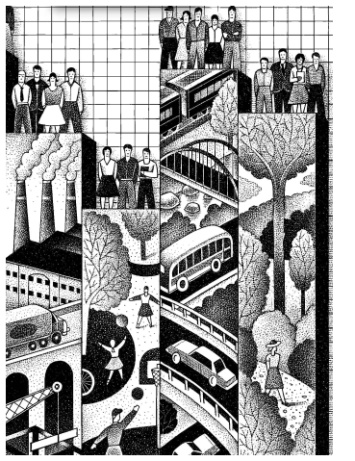 At the heart of the local planning process is public participation — without it, comprehensive plans and implementing regulations will not truly reflect community needs and desires.
Continue to older articles & posts — or return to newer ones — where you see the green buttons at the bottom of the page.
In this final part of their series, Mary Madden and Joel Russell discuss the vital relationship between the planning process and the development of a form-based code.

Preparing in advance is very helpful in successfully navigating controversial zoning requests. Some pointers from attorney Ron Richards.

How do we deal with an “apathetic” public? Or is that the wrong question for us to be asking?
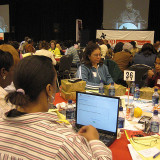
Stuart Andreason provides highlights from the “Technicity” course — about the good, the bad, and the unknown of using technology for public engagement.
A scientifically conducted survey of residents brings in the voice of the public to bear on planning issues like no forum, newspaper straw poll, or focused discussion.

Citizen participation is enough of a challenge in any city — but how do you deal with engaging citizens when 42% of your population is foreign-born, with people speaking many different languages?

Attorney Alan C. Weinstein provides an overview of how to avoid violating Open Meetings laws — including situations that are particularly troublesome: meetings in executive session, site-visits, “informal” meetings with staff, and electronic communications.
An introduction to the goals and structure of open meeting laws — including a look at the key question: what constitutes a “meeting”?
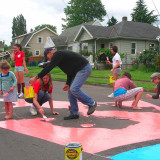
What do street intersections have to do with strong neighborhoods and empowered citizens? Aren’t intersections just for dividing up blocks, and getting traffic through? Take a look at a program that’s turned intersections on their head.

As your commission, your department, or your local government start using social media tools more and more, it’s essential to look at these with a clear, un-awed eye … and realize that the tools we need to do our work well require much more than just a Facebook page.

Our national public discourse hasn’t been very good at real discussion lately. Even on TV news shows that claim to be “discussing” issues, what you too often hear is people talking over and shouting past each other. But planning commissions can set a positive example in public hearings and meetings.
We claim in local government to want to have the community involved — we call it “public engagement” or “public feedback” or “stakeholder involvement” — but the fact is, most of the time we’re paying lip service to the idea, at best if we want to find solutions to the complex, tangled issues we face — we need dialogue, we need collaborators.

Collaboration should be the ultimate goal of our planning efforts. If we design our public engagement strategies to build Collaboration, we can do more than what our planning commissions can do alone. We can strengthen the full set of muscles we need to make the entire community better.
