
How Far is Too Far?
Attorney John Ronayne provides a primer on how courts approach “takings” cases.


“Zoning is merely a tool. It can be used constructively as a positive force for community good or it can be misused.” — Edward McMahon, from “What's So Bad About Zoning?”
Continue to older articles & posts — or return to newer ones — where you see the green buttons at the bottom of the page.
Attorney John Ronayne provides a primer on how courts approach “takings” cases.

Attorney Terence Boga reviews the basic legal principles involved in zoning for adult businesses.

Too often planning commission and neighborhood involvement comes only after costly subdivision drawings have already been prepared. Randall Arendt on three key steps in shifting to a more proactive review process.

Attorney Robert Widner offers a primer on the basics of zoning variances.

Michael Chandler provides an overview of the role of local zoning boards, and why it’s important for planning commissions to be familiar with zoning board decisions.
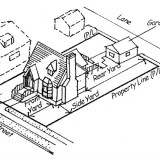
An important challenge facing planners is to ensure that local zoning ordinances can be readily understood by applicants and the general public. One approach is to add illustrations to help explain the ordinance’s requirements.

Long-time planners and PCJ contributing writers Mike Chandler and Greg Dale take a look at the impact that changes in our society are having on local zoning regulation.

A reality check on four myths about zoning and land use regulation: 1. Zoning is un-American, 2. Sparsely populated rural areas don’t need to control uses of land, 3. Land use controls will increase taxes and reduce property values, and 4. Planning is a bad idea.

Overlay zones can provide increased flexibility in local zoning codes. Attorney and planner Elizabeth Garvin covers the basics of using overlay zones.
Mike Chandler and Greg Dale look at zoning basics with an overview of the purposes of zoning, the structure of a typical zoning ordinance, and the principal players in the “zoning universe.” With sidebars on key zoning-related legal issues.

A growing number of cities and towns are using design guidelines to help preserve or reinforce the distinctive architectural character of certain areas or districts. Planner Ilene Watson explains what design guidelines are and how they can be used.

Interested in controlling signs and billboards? Thinking about an ordinance regulating adult entertainment? Law professor Alan Weinstein provides a planning law primer on the First Amendment’s free speech clause and its relationship to local zoning regulation.

Regulation of on-premise advertising signs is one important means by which a community can assert control over its physical environment. The end result is not just a more visually attractive environment, but one in which businesses can communicate more effectively to their customers.
